

The History of the Zenith El Primero: World's First High-Frequency Automatic Chronograph
The Zenith El Primero: A Revolution in Mechanical Watchmaking
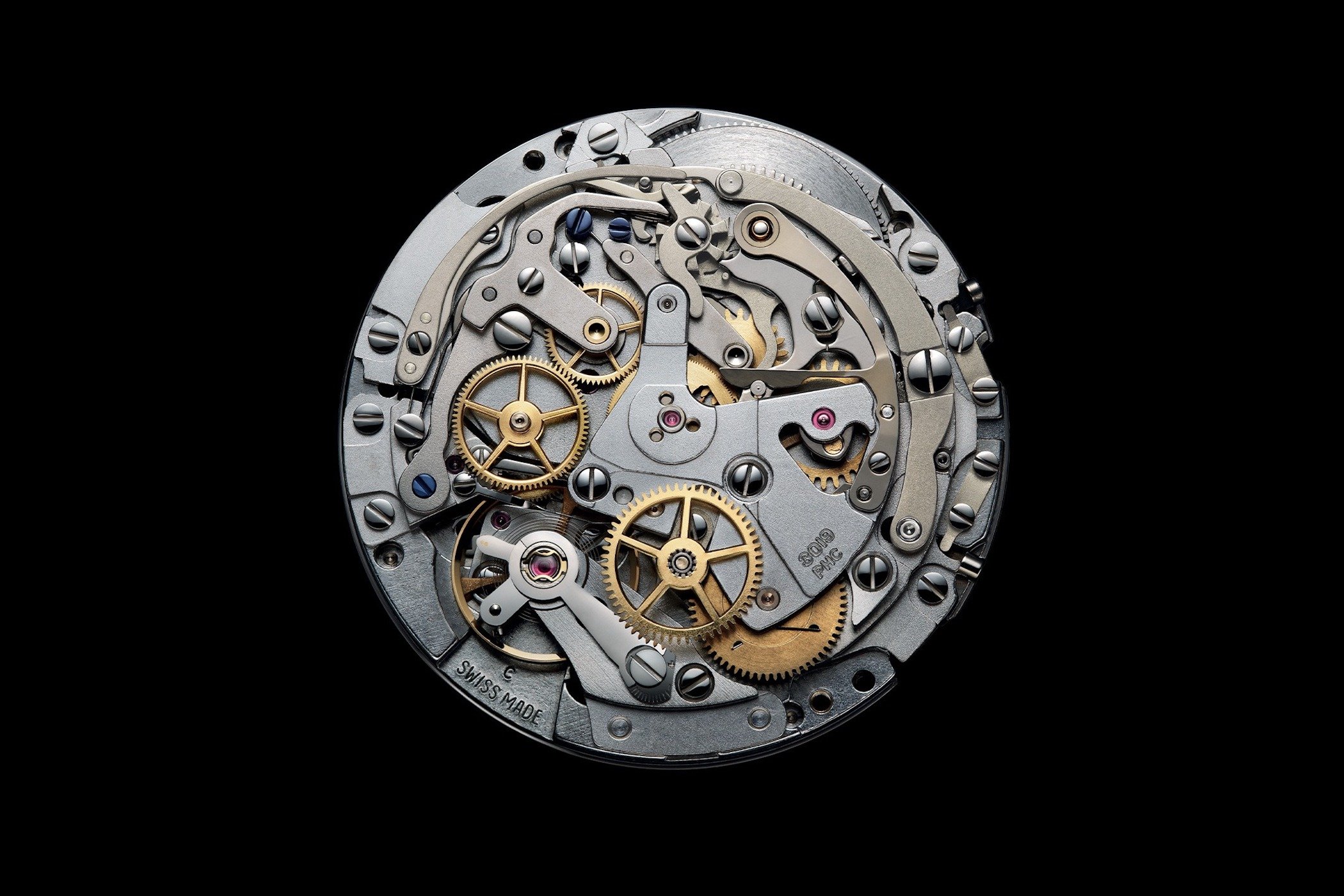
In 1969, Zenith achieved what many thought impossible – creating the world's first high-frequency automatic chronograph movement. The El Primero, meaning "The First" in Esperanto, operating at 36,000 vibrations per hour (5Hz), represented a quantum leap in mechanical watchmaking precision that continues to influence the industry more than five decades later.
The Race to Create the First Automatic Chronograph
The late 1960s saw an intense competition among Swiss manufacturers to develop the first automatic chronograph movement. Three groups worked simultaneously: Zenith, Heuer/Breitling/Hamilton (Caliber 11), and a consortium involving Rolex and others. Zenith's approach was distinctive – rather than adding a micro-rotor module to an existing movement, they designed an integrated calibre from scratch.
Technical Breakthrough: 5Hz Frequency
Most mechanical watches operate at 3Hz (21,600 vph) or 4Hz (28,800 vph). The El Primero's 5Hz frequency was revolutionary for several reasons:
- Enhanced Precision: Higher frequency means more oscillations per second, reducing the effect of external disturbances on timekeeping accuracy
- 1/10th Second Chronograph: The 5Hz frequency allows the chronograph to measure time intervals to 1/10th of a second directly – a feat unmatched by most competitors
- Smoother Seconds Hand: The increased frequency creates a noticeably smoother sweep of the chronograph seconds hand
The Quartz Crisis and Survival
Ironically, just as the El Primero was establishing itself as a masterpiece of mechanical engineering, the quartz revolution threatened to make all mechanical watches obsolete. In 1975, Zenith's new owners decided to cease mechanical movement production. However, master watchmaker Charles Vermot had secretly hidden the original El Primero tools, dies, and technical documentation in an attic space in the manufacture – an act of preservation that would prove crucial to the movement's survival.
Key Milestones in El Primero History
| Year | Milestone |
|---|---|
| 1969 | El Primero introduced – world's first integrated automatic chronograph at 5Hz |
| 1975 | Zenith ceases mechanical production; Vermot hides tooling |
| 1984 | Rolex commissions El Primero for Daytona; mechanical production resumes |
| 1994 | El Primero 400 introduced with 50-hour power reserve |
| 2021 | El Primero 3600 achieves 1/10th second with central rotor |
| 2026 | Chronomaster Sport Skeleton debuts with skeletonized El Primero 3600 SK |
The Rolex Connection
One of the most fascinating chapters in El Primero history is its relationship with Rolex. When Rolex needed a high-quality automatic chronograph movement for the Daytona in the early 1980s, they turned to Zenith. For over a decade, the Rolex Daytona used a modified El Primero calibre (designated cal. 4030), reduced from 5Hz to 4Hz for increased power reserve. This partnership validated the El Primero's exceptional quality and brought it to an even wider audience.
Modern El Primero Evolution
Today's El Primero movements continue to push boundaries. The latest generation, including the cal. 3600, achieves true 1/10th second chronograph capability with a central oscillating weight. Materials science has also advanced – silicon escapement components reduce friction and eliminate the need for lubrication in critical areas, enhancing long-term reliability.
Cultural Impact
Beyond its technical achievements, the El Primero has become a cultural icon. It has been worn by astronauts, featured in films, and remains a reference point for high-frequency watchmaking. Its distinctive triple chronograph counter layout and flowing case lines have become instantly recognizable symbols of Zenith's innovative spirit.
Frequently Asked Questions
Why is the El Primero considered superior to other chronograph movements?
The El Primero's 5Hz frequency provides inherent advantages in precision and chronograph resolution. Additionally, its integrated design (rather than modular construction) allows for a slimmer profile, and its decades of refinement have created an exceptionally reliable and serviceable movement.
Did Charles Vermot's actions really save the El Primero?
Without Vermot hiding the essential tooling and documentation, Zenith would have had to recreate everything from scratch when mechanical watches returned to favor. His foresight preserved irreplaceable manufacturing knowledge and allowed the El Primero to be revived relatively quickly in the 1980s.
How does the modern El Primero compare to the original 1969 version?
Modern El Primero movements maintain the same 5Hz frequency and fundamental architecture but incorporate decades of refinement: improved power reserve (from 50 to 60+ hours), silicon components, enhanced anti-magnetic properties, and modern manufacturing tolerances that improve consistency and longevity.
Explore the Collection
Discover the full range of Zenith El Primero watches or learn about high-frequency movement technology in modern horology.
Source: Monochrome Watches, August 2024