
The Dancing Cage: 10 Best Tourbillon Watches in High-End Horology
The Art of the Tourbillon: Understanding High-End Watchmaking's Most Iconic Complication
Few complications in high-end watchmaking captivate the eye like the tourbillon. As noted by quillandpad.com, the hypnotic motion of a tourbillon cage transforms timekeeping into a visual performance, combining mechanical precision with artistic expression. Quill & Pad recently highlighted 10 of the best tourbillon watches currently available, showcasing the diversity of this iconic complication.
What Is a Tourbillon?
Originally invented by Abraham-Louis Breguet in 1801, the tourbillon was designed to improve accuracy by mounting the escapement and balance wheel inside a rotating cage. This counteracts the effects of gravity on the movement. While modern materials and manufacturing have reduced the practical need for a tourbillon, it remains the ultimate symbol of haute horlogerie craftsmanship.
- Purpose: Counteracts gravitational effects on the balance wheel
- Invented: 1801 by Abraham-Louis Breguet
- Typical Rotation: One full rotation per minute
- Components: Cage, balance wheel, escapement, and hairspring
Top Tourbillon Watches Featured by Quill & Pad
| Brand | Model | Tourbillon Type | Notable Feature |
|---|---|---|---|
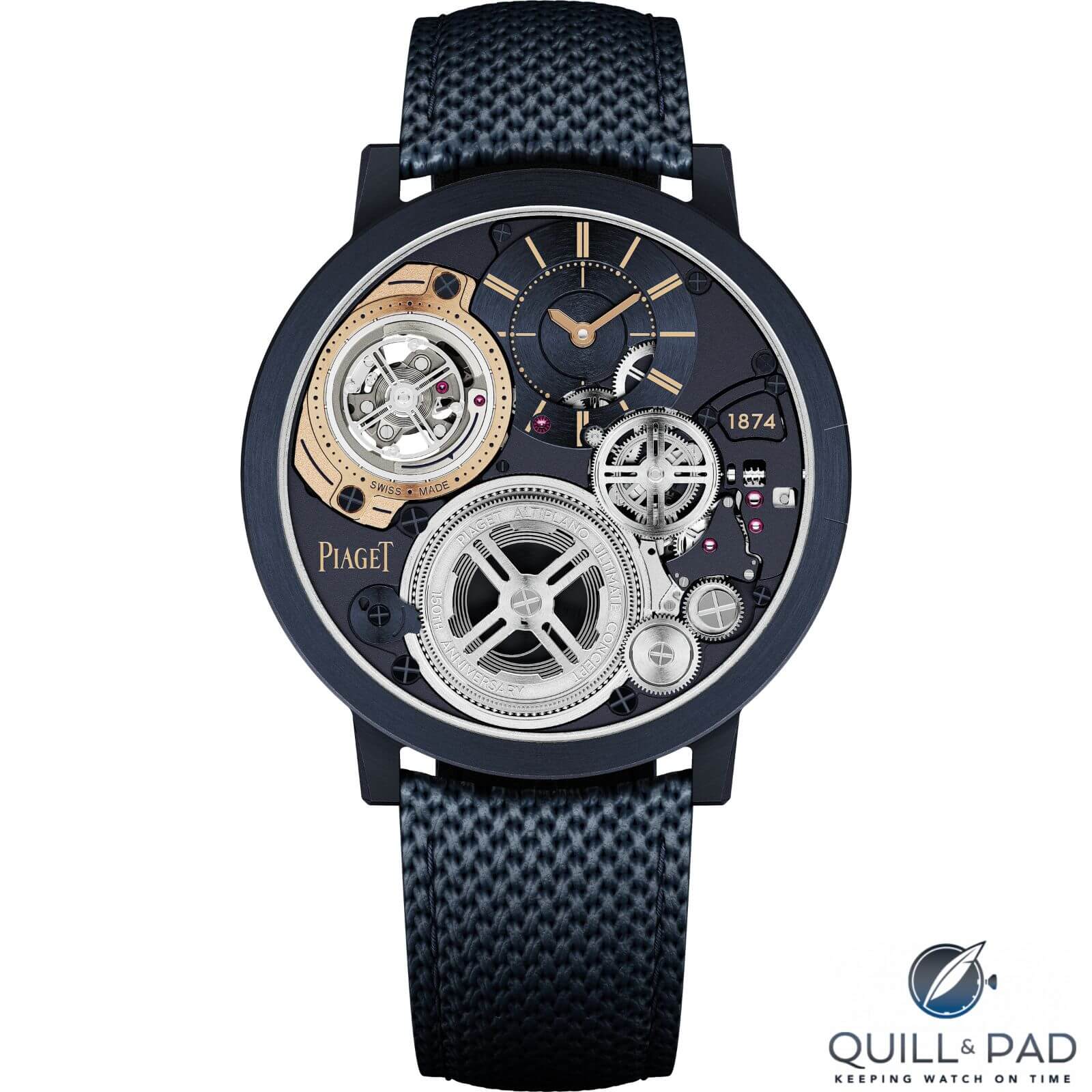
| Piaget | Altiplano Concept Tourbillon | Ultra-thin flying tourbillon | Thinnest tourbillon movement |
| A. Lange & Söhne | Lange 1 Tourbillon | One-minute tourbillon | German silver finishing |
| Vacheron Constantin | Traditionnelle Tourbillon | Skeleton tourbillon | Geneva Seal certified |
| F.P. Journe | Tourbillon Souverain | Remontoir d'egalité | Constant force mechanism |
| Greubel Forsey | Double Tourbillon 30° | Double axis tourbillon | Two inclined rotating cages |
| Breguet | Classique Tourbillon | Traditional Breguet tourbillon | Heritage design language |
| Jaeger-LeCoultre | Master Grande Tradition | Spherical tourbillon | Astronomical display |
| MB&F | Legacy Machine FlyingT | Flying tourbillon | Vertical movement architecture |
Tourbillon vs. Other Complications
The tourbillon occupies a unique position among watch complications. While chronographs and perpetual calendars offer practical functionality, the tourbillon serves primarily as an expression of watchmaking mastery. The visual appeal of the rotating cage, visible through a sapphire caseback or openworked dial, makes it a favorite among collectors who value craftsmanship as much as precision.
Understanding movement mechanics is essential for appreciating complications like the tourbillon. For further reading, explore our guides on NH35 vs NH36 vs NH34 Movement Guide and Seiko Mod Compatibility Checklist.
The Future of the Tourbillon
Modern watchmakers continue to push the boundaries of tourbillon design. Double and triple-axis tourbillons, flying tourbillons without upper bridges, and tourbillons integrated with minute repeaters represent the cutting edge of this complication. As manufacturing techniques advance, tourbillons are becoming more accessible, with some independent brands offering the complication at relatively approachable price points.
Frequently Asked Questions
What is the purpose of a tourbillon?
A tourbillon was originally invented to improve accuracy by rotating the escapement to counteract the effects of gravity. Today, it primarily serves as a demonstration of watchmaking skill and craftsmanship.
How much does a tourbillon watch cost?
Tourbillon watches range widely in price. Entry-level tourbillons from independent brands can start around $15,000, while pieces from established haute horlogerie brands typically range from $50,000 to over $500,000.
Is a tourbillon more accurate than a regular watch?
In modern watchmaking, a tourbillon does not necessarily provide better accuracy than a well-regulated standard movement. Its primary value lies in the artistry and mechanical complexity it represents.
Source: According to quillandpad.com