

World Timers: The Essential Companion for Global Travelers
World Timers: The Essential Companion for Global Travelers
Remember when travel actually felt like an adventure? Today, instant texts and video calls make the whole world feel tiny. We seem to have completely lost the romance of distance. But not so long ago, crossing the globe took real effort. In that era of physical journeys and time zone challenges, world timer watches emerged as essential tools for those who navigated our planet's complex temporal landscape.
The Psychology of Time and Travel
Time zones represent more than just practical adjustments for daylight hours. They embody the physical reality of our planet's rotation and the human experience of distance. Before digital communication collapsed geographical barriers, crossing time zones meant entering different temporal realities. World timer watches provided a mechanical connection to this global tapestry of time.
| Era | Travel Experience | Time Management Tool |
|---|---|---|
| Pre-1920s | Weeks/months by ship/train | Local time only |
| 1920s-1960s | Emerging commercial aviation | World timer complications |
| 1970s-2000s | Jet travel becomes common | GMT watches, world timers |
| 2000s-Present | Digital age travel | Smartphones, traditional watches |
World Timers vs. GMT Watches: Understanding the Difference
While both complications address multi-timezone needs, world timers and GMT watches serve different purposes and audiences. Understanding these differences helps collectors choose the appropriate tool for their needs.
Key distinctions include:
- Complexity: World timers display all 24 time zones simultaneously, while GMT watches typically show two
- Mechanism: World timers use rotating city discs, GMT watches add a fourth hand
- Ideal User: World timers suit those needing global perspective, GMT watches for regular two-zone travelers
- Visual Presentation: World timers provide complete temporal overview, GMT watches offer simplified dual display
Andersen Genève Communication 45: A Case Study
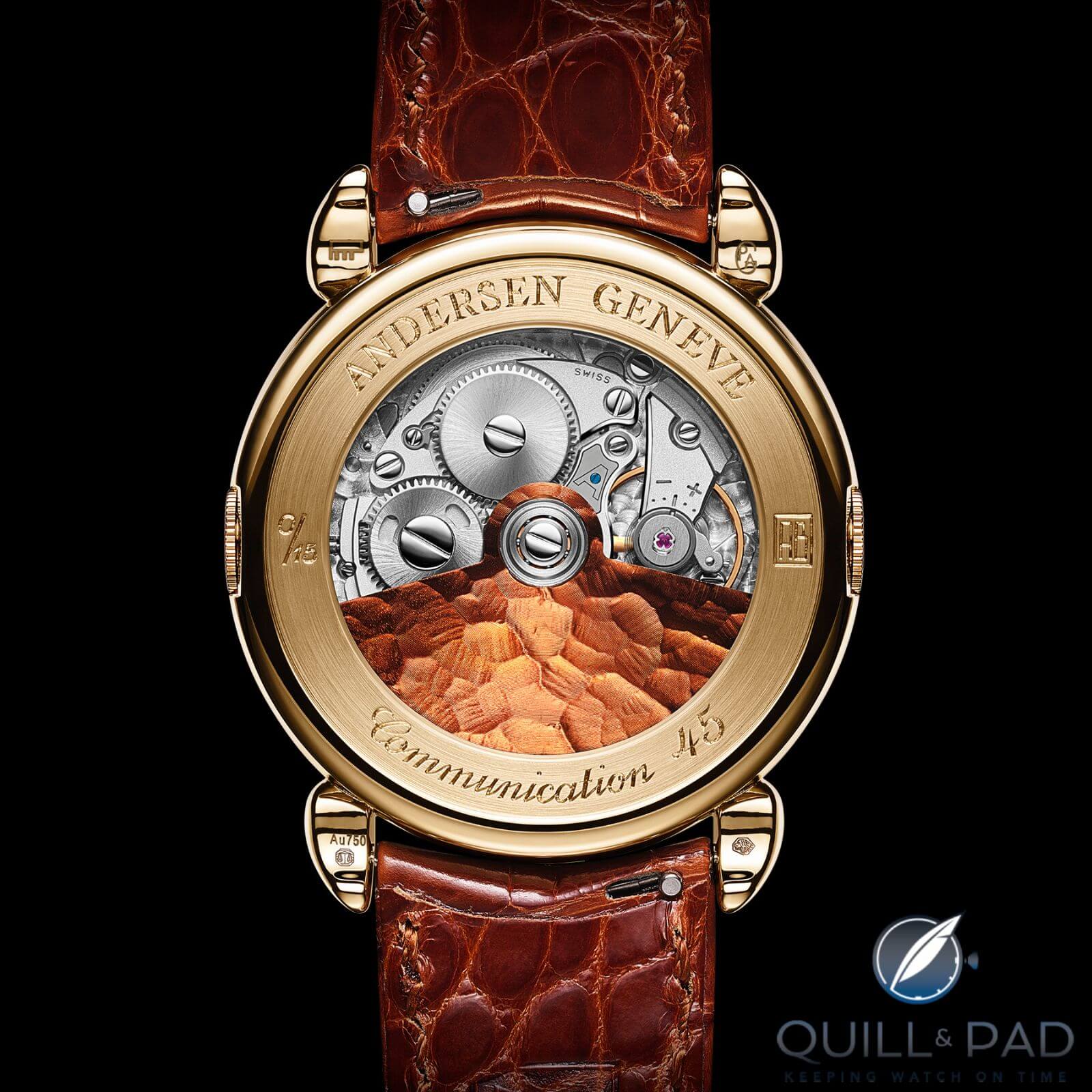
The Andersen Genève Communication 45 exemplifies the world timer's enduring appeal. As highlighted by Quill & Pad, this platinum timepiece celebrates the art of travel in an age of instant communication. The watch represents more than technical achievement—it embodies a philosophy of time and distance.
Key features of the Communication 45 include:
- Platinum Construction: Ultimate precious metal for durability and exclusivity
- World Timer Mechanism: Traditional city disc system for all 24 time zones
- Artistic Dial: Hand-guilloché patterns creating visual depth
- Manufacture Movement: Swiss-made caliber assembled in Geneva workshops
The Modern Relevance of World Timers
Despite smartphones providing world time at our fingertips, mechanical world timers maintain significant relevance. This persistence stems from several factors:
- Tactile Connection: Physical interaction with time zones creates meaningful engagement
- Design Appreciation: Beautiful mechanisms appeal to aesthetic sensibilities
- Philosophical Statement: Choosing mechanical timekeeping over digital convenience
- Collector Interest: Complex complications attract horological enthusiasts
Choosing a World Timer: Practical Considerations
For those considering a world timer purchase, several practical aspects deserve attention:
- Legibility: Clear dial design for quick time zone reading
- Operation: Intuitive setting mechanisms despite complexity
- Durability: Robust construction for travel use
- Service: Accessibility of maintenance and repair
The Future of World Timers
According to Quill & Pad, world timers continue to evolve while maintaining their core purpose. Modern iterations incorporate advanced materials and manufacturing techniques while preserving the essential mechanism that makes them valuable tools for global citizens. As travel patterns change and new markets emerge, world timers adapt to serve contemporary needs.
Frequently Asked Questions
Are world timers still practical in the digital age?
While smartphones provide convenient world time access, mechanical world timers offer several advantages: tactile engagement, beautiful mechanisms, and a philosophical statement about timekeeping. Many collectors appreciate world timers as both functional tools and wearable art.
How do I set a world timer watch?
Most world timers use a rotating city disc aligned with a time zone indicator. After setting local time, you rotate the disc to align your current city with the indicator. All other time zones then display correctly relative to local time. Specific operations vary by model.
What's the difference between a world timer and a GMT watch?
World timers display all 24 time zones simultaneously using city discs, while GMT watches typically show two time zones with an additional hand. World timers provide complete global time perspective, while GMT watches simplify dual-timezone needs. The choice depends on travel patterns and personal preference.
According to Quill & Pad
Further Reading
Explore our watch guides for more information: