

Vegan Watch Straps and Eco-Friendly Materials: The Future of Sustainable Horology
The Shift Toward Animal-Free Watch Straps
The watch industry is experiencing a quiet revolution in strap materials. Driven by both environmental concerns and ethical considerations, an increasing number of brands are adopting plant-based and recycled alternatives to traditional leather. From apple fiber to pineapple leaves, the options for eco-conscious watch enthusiasts are expanding rapidly.
Plant-Based Leather Alternatives
Several innovative materials have emerged as viable replacements for animal leather in watch straps:
| Material | Source | Key Properties | Brands Using It |
|---|---|---|---|
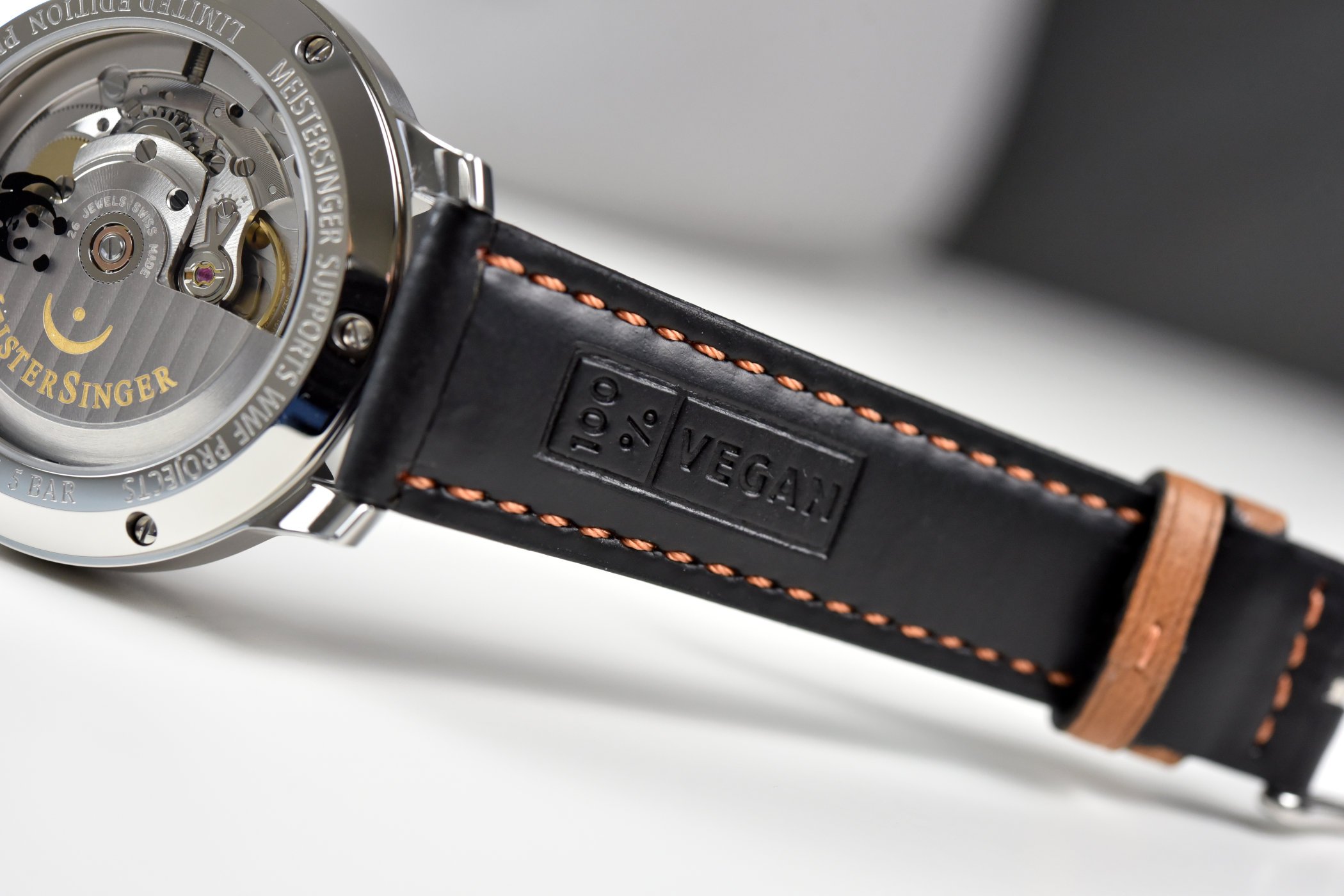
| Apple fiber leather | Apple juice industry waste | Soft, breathable, water-resistant | MeisterSinger, Colareb |
| Piñatex (pineapple) | Pineapple leaf fiber (PALF) | Robust, lightweight, biodegradable | Various startups |
| Fennel-based leather | Fennel plant fibers | Flexible, natural appearance | Panatere |
| Grape leather | Grape pomace from wine industry | Soft texture, water-resistant | Panatere, Hirsch |
| Cork | Cork oak bark (renewable) | Lightweight, waterproof, biodegradable | Various brands |
| Hirsch Wine | Organic vineyard leaves | Natural leaf appearance, limited edition | Hirsch |
Recycled Material Straps
Beyond plant-based options, recycled materials have gained significant traction. Dutch/Swiss brand GYRE produces watch cases from upcycled fishing nets, with straps made from recycled plastic bottles. Seaqual® weaves fabric from upcycled marine plastic found on the ocean floor, with linings made from apple skin waste recovered from the food industry.
IWC introduced TimberTex straps made from low-impact paper-based material, while Oris has experimented with recycled materials in its Big Crown line. These innovations demonstrate that sustainability and quality need not be mutually exclusive.
The Production Process
Plant-based leather production follows a consistent methodology: fruit or vegetable peels are extracted, sun-dried (or oven-dried), purified from impurities, and processed into a fluffy base material. This material is then felted through mechanical, thermal, and chemical processes into sheets of "leather" suitable for strap cutting.
The environmental benefits are substantial: these straps are typically PVC-free, plastic-free, contain no heavy metals, are hypoallergenic, naturally water-resistant, and 100% biodegradable. Strength tests according to ISO standards confirm that materials like Piñatex meet demanding requirements for abrasion resistance, tensile strength, and color fastness.
MeisterSinger's Planet Earth Initiative
German brand MeisterSinger has been a pioneer in vegan watch straps. Their Edition Planet Earth, created in partnership with WWF, features apple-fiber straps and eco-friendly packaging. Each watch sold donates €200 to WWF, with the 500-piece limited edition generating €100,000 for ocean conservation.
Brand representative Tanja Brassler noted: "The plant-based watch straps behave exactly like their genuine leather counterparts and have also passed comprehensive material and wearing tests with flying colours."
Market Challenges
Despite innovation, demand for vegan straps remains limited. Strap manufacturer Henrik de Keizer observed: "We don't see any demand for non-animal straps yet. True, producers are abandoning more exotic leathers like lizard or alligator because people think it's cruel. I just wonder why it wouldn't be cruel to kill a cow or lamb for its leather." Price sensitivity remains a barrier, with best-selling leather straps typically priced under €50.
Frequently Asked Questions
Do vegan watch straps last as long as leather?
Yes. Materials like apple fiber leather and Piñatex have passed ISO-standard abrasion and durability tests. MeisterSinger reports their vegan straps "behave exactly like their genuine leather counterparts" in real-world testing.
Are vegan straps more expensive than leather?
Not necessarily. While some premium vegan options exist, prices for apple-fiber and cork straps are comparable to mid-range leather alternatives. Hirsch's Wine strap, for example, starts at €99.99.
What brands offer vegan strap options?
MeisterSinger, Hirsch, Colareb, Panatere, and several microbrands offer plant-based strap options. IWC offers TimberTex paper-based straps, while Oris has experimented with recycled materials.
Source: Monochrome Watches — What the World Needs Now: How Ecologically Sound is our Watch? by Melinda Braaksma (December 2021)
Also read: Watch Strap Materials Comparison