
Tissot PRC 100 Solar: How Light-Powered Quartz Compares to Mechanical Watches
Tissot PRC 100 Solar: Swiss Solar Technology for Under $500
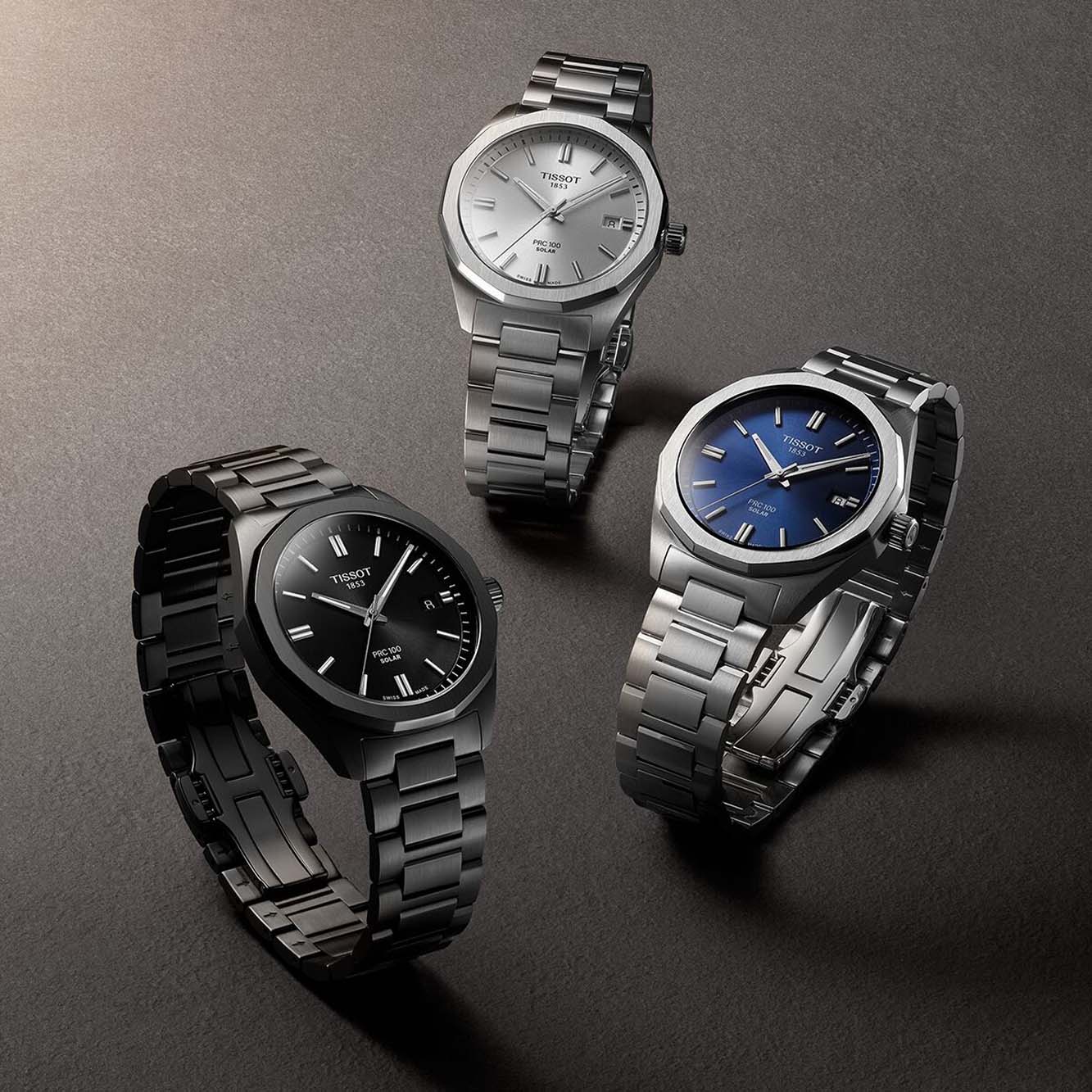
Tissot has expanded its solar offerings with the new PRC 100 Solar collection, bringing accessible solar-powered timekeeping to the Swiss watch market. The collection features the new Lightmaster Solar Quartz movement, designed to capture both natural and artificial light through honeycomb-structured solar cells.
Understanding Solar Quartz Technology
Solar quartz watches represent a hybrid approach to timekeeping, combining the accuracy of quartz crystal oscillation with the convenience of light-powered charging. Unlike traditional quartz watches that require regular battery replacements, solar models can operate indefinitely with regular light exposure.
The Tissot Lightmaster caliber F06.615 demonstrates the practicality of this technology: a full charge provides 14 months of power reserve, while just ten minutes of natural light charging delivers 24 hours of operation. This "grab and go" convenience makes solar watches particularly appealing for daily wear.
Solar Quartz vs Mechanical: A Practical Comparison
| Characteristic | Solar Quartz (Tissot) | Mechanical Automatic |
|---|---|---|
| Accuracy | ±15 seconds/month | ±15-25 seconds/day |
| Power Source | Light energy | Motion (winding) |
| Power Reserve | 14 months | 38-80 hours |
| Maintenance | Battery every 8-15 years | Service every 5-10 years |
| Price Range | $400-$600 | $500-$2,000+ |
| Thickness | Typically thinner | Often thicker due to rotor |
The Enthusiast Perspective
Watch enthusiasts have historically favored mechanical movements for their craftsmanship, heritage, and the romantic notion of a self-winding mechanism powered by wrist movement. However, as noted by Worn & Wound's Zach Kazan, "There are a number of watchmaking technologies that are tough to appreciate until you've actually spent considerable time with a watch."
Solar quartz technology offers tangible benefits that resonate with practical collectors: superior accuracy, virtually maintenance-free operation, and the peace of mind that comes with a watch that keeps running as long as it sees light regularly.
Market Position and Competitors
At $495, the Tissot PRC 100 Solar competes directly with Citizen Eco-Drive models, Casio Tough Solar watches, and Seiko Solar offerings. The Swiss Made designation and Tissot's brand heritage provide additional value proposition in this competitive segment.
The collection launches with 39mm cases in silver, blue, and black dial variants, with 34mm models including two-tone and gold PVD versions planned for later in 2026.
Frequently Asked Questions
Q: How long do solar watches last?
A: Solar watches can last indefinitely with proper care. The photovoltaic cells typically maintain 80%+ efficiency after 20 years. The internal battery may need replacement every 8-15 years, but this is far less frequent than standard quartz battery changes.
Q: Can solar watches charge from indoor lighting?
A: Yes, but efficiency varies. Tissot's Lightmaster cells are designed to capture artificial light, though natural sunlight provides much faster charging. Ten minutes of sunlight equals approximately 24 hours of power.
Q: Are solar watches more accurate than automatic?
A: Significantly. Solar quartz watches typically achieve ±15 seconds per month accuracy, while automatic mechanical watches vary from ±15 to ±25 seconds per day. This makes solar quartz approximately 30 times more accurate.
Sources: Worn & Wound, Tissot Official