

Silicon Hairspring Patent Expiration: What It Means for Watchmaking Innovation
The Patent That Changed Silicon Hairspring Access
The hairspring — barely one centimetre in diameter — remains the beating heart of every mechanical watch movement. For years, silicon hairsprings represented the most significant advancement in this critical component, offering superior thermo-compensation, antimagnetic properties, and durability compared to traditional iron-nickel alloys like Nivarox. However, access to this technology was restricted by a key patent held by the CSEM consortium.
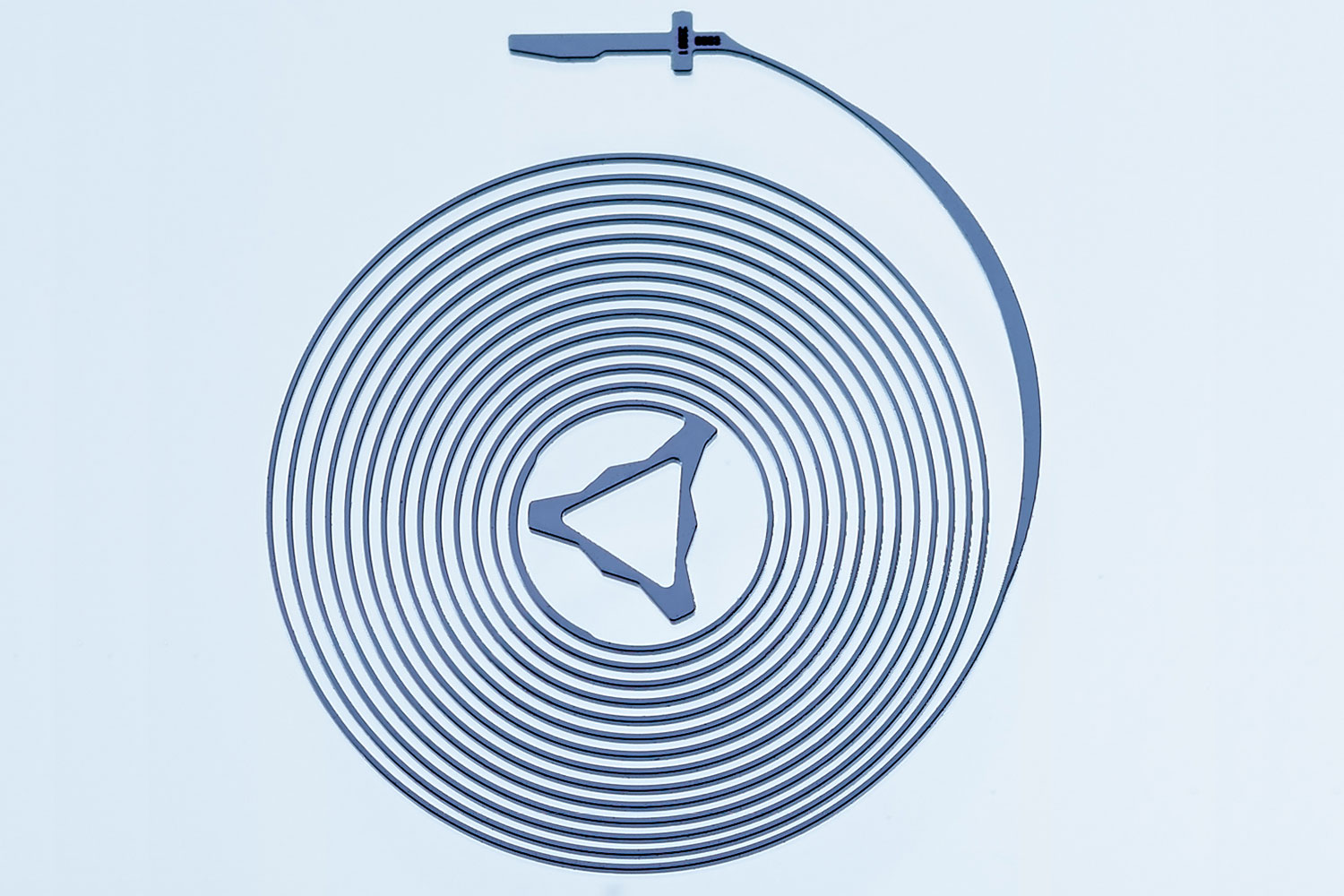
The European patent EP1422436B1, filed on November 25, 2002, protected the technology for producing ultra-accurate and thermally compensated silicon hairsprings. This patent was developed through a joint research project by the CSEM (Centre Suisse d'Electronique et de Microtechnique) in collaboration with Rolex, Patek Philippe, and the Swatch Group. The technology used silicon dioxide (SiO2) surface oxidation to achieve thermo-compensation — a breakthrough that solved silicon's initial temperature sensitivity problem.
Who Benefited From the Patent?
Until the patent's expiration, only a select group of companies could legally produce and use this advanced silicon hairspring technology:
| Brand/Group | Silicon Hairspring Name | Introduction Year |
|---|---|---|
| Patek Philippe | Spiromax | 2006 |
| Rolex | Syloxi | 2014 |
| Breguet (Swatch Group) | Silicon hairspring | 2006 |
| Ulysse Nardin | Silicon components | 2001 (Freak) |
Patek Philippe introduced its Spiromax balance spring in 2006, while Breguet pioneered silicon hairsprings within the Swatch Group the same year. Rolex followed in 2014 with the Syloxi hairspring, first used in calibre 2236. Ulysse Nardin, who initially pioneered silicon components in the Freak watch in 2001, participated through a gentleman's agreement with the consortium.
Why Silicon Beats Traditional Hairsprings
Silicon hairsprings offer multiple advantages that have driven innovation in the industry:
- Thermo-compensation: Temperature changes traditionally affect the elastic modulus of hairsprings, altering timekeeping accuracy. Silicon hairsprings with SiO2 oxidation layers achieve remarkable thermal stability.
- Chronometry: Deep-Reactive Ion Etching (DRIE) manufacturing allows geometries impossible with metal strips, enabling optimized isochronism without terminal curves.
- Antimagnetic: Silicon is completely non-ferromagnetic, eliminating one of the traditional hairspring's greatest weaknesses.
- Durability: Silicon is lightweight, hard-wearing, and requires no lubrication at the microscopic level.

Post-Patent Landscape: New Players Emerge
With the original patent now expired, the industry is entering what many call "the silicon age." Several new players have already positioned themselves:
Horage, an independent watchmaking brand, has been developing silicon hairspring technology with a German partner for years. Founder Andi Felsl stated: "Silicon will kickstart innovation in all layers of the industry as we have seen it on escapement design following a prior patent expiry date in 2016. Silicon has the potential to afford more brands the opportunity to produce and deliver high-performance movements."
Damasko, a German manufacturer, already presents their patented EPS silicon spiral, demonstrating that non-Swiss companies can now compete in this space. Meanwhile, Sigatec — a joint venture between Ulysse Nardin and Mimotec (now owned by Acrotec) — is expanding production capacities to serve third-party brands.
Challenges Ahead
Despite the patent expiration, barriers remain. Mastering the industrial production of silicon hairsprings requires significant investment and expertise. The DRIE process demands specialized equipment, and achieving high yields from silicon wafers takes years of refinement. Additionally, numerous secondary patents filed since 2002 — covering specific production processes, geometries, and attachment methods — create a legal landscape that new entrants must navigate carefully.
Major groups like Richemont, which had previously developed their Twinspir technology before pausing due to the CSEM patent, may re-enter the silicon hairspring market. The LVMH group, through TAG Heuer's advanced R&D capabilities, could also expand beyond their carbon composite hairspring technology into silicon applications.
FAQ
What makes silicon hairsprings better than traditional metal ones?
Silicon hairsprings offer superior thermo-compensation, complete antimagnetic properties, better chronometric performance through optimized geometries, and enhanced durability. The DRIE manufacturing process enables designs impossible with conventional metal alloys.
Can existing watches be upgraded with silicon hairsprings?
Yes, in principle, watches can be retrofitted with silicon hairsprings during servicing. The hairspring is a replaceable component, and silicon versions can substitute for traditional metal ones, though compatibility varies by movement.
Will silicon hairsprings become standard in entry-level watches?
With the patent barrier removed, silicon hairsprings are expected to gradually appear in more affordable timepieces. Brands like Horage and independent suppliers are already working to make the technology accessible at lower price points.
Source: Monochrome Watches — "The Future Of Silicon Hairsprings, Now That The Patent Has Expired?" by Xavier Markl (November 28, 2022)
Explore More Watch Technology | Silicon in Watchmaking Guide