

Silicon Hairspring Patent Expiration: How a Legal Change Could Revolutionize the Watch Industry
The Patent Expiration That Could Transform Watchmaking
A pivotal moment has arrived in the watch industry. The European patent EP1422436B1, filed on November 25, 2002, which restricted silicon hairspring technology to the CSEM consortium (Rolex, Patek Philippe, and the Swatch Group), has expired. This development could democratize access to one of watchmaking's most significant technological advancements in decades.
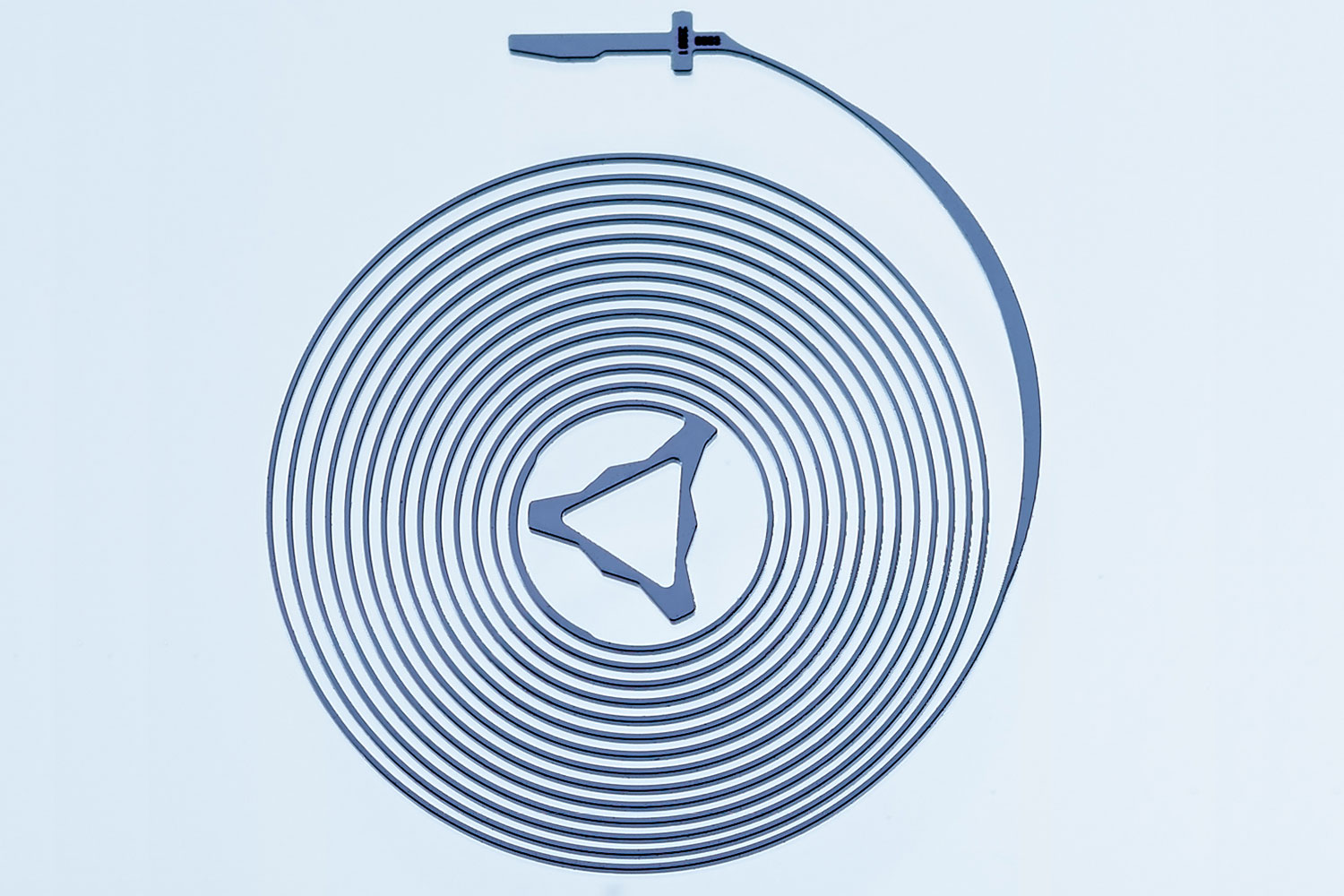
Understanding Silicon Hairspring Technology
The hairspring is the beating heart of a mechanical watch movement, barely one centimeter in diameter yet responsible for the oscillator's isochronous rhythm. Traditional hairsprings are made from iron-nickel alloys like Nivarox, but silicon presents remarkable advantages that have been revolutionizing the industry.
Key Advantages of Silicon
| Property | Traditional Metal | Silicon |
|---|---|---|
| Temperature Stability | Affected by variations | Thermally stable via SiO2 oxidation |
| Magnetic Resistance | Ferromagnetic (affected) | Completely amagnetic |
| Weight | Heavier | Extremely lightweight |
| Manufacturing | Manual/stamping process | DRIE (Deep Reactive Ion Etching) |
| Lubrication Required | Yes | No (frictionless) |
| Geometry Flexibility | Limited to uniform strip | Variable thickness possible |
Who Pioneered Silicon in Watchmaking?
Ulysse Nardin was first to use silicon components in watches with the Freak in 2001, utilizing silicon escapement wheels. However, the breakthrough in silicon hairsprings came from the CSEM consortium, where Claude Bourgeois developed thermo-compensation using SiO2 surface oxide layers.
Patek Philippe introduced its Spiromax balance spring in 2006, while Rolex developed the Syloxi hairspring, first appearing in 2014 on calibre 2236. The Swatch Group's Breguet also pioneered silicon balance springs in 2006.
Industry Impact
The patent expiration opens doors for new entrants. Independent brand Horage has already been developing silicon hairspring technology with a German partner. Damasko presents their patented EPS silicon spiral from Germany, while companies like Sigatec (owned by Ulysse Nardin) are expanding production capacity for third-party brands.
As Andi Felsl, founder of Horage, states: "Silicon will kickstart innovation in all layers of the industry as we have seen it on escapement design following a prior patent expiry date in 2016."
Challenges Ahead
Despite the patent expiration, challenges remain. Mastering industrial silicon hairspring production requires significant investment and expertise. Additional patents filed since 2002 for specific production processes, geometries, and attachment methods create a legal landscape that new entrants must navigate carefully.
FAQ
What was the CSEM consortium patent?
European patent EP1422436B1, filed in 2002, protected the technology for producing thermally compensated silicon hairsprings using SiO2 surface oxidation. It restricted this technology to Rolex, Patek Philippe, Swatch Group, and Ulysse Nardin via agreement.
Can any watchmaker now use silicon hairsprings?
The core patent has expired, allowing broader access. However, numerous additional patents for specific geometries and processes remain active, requiring careful navigation by new entrants.
Will silicon hairsprings make watches more affordable?
In time, silicon technology could reduce costs through mass production efficiencies. However, initial adoption will likely focus on premium collections as brands invest in manufacturing capabilities.
Sources: Monochrome Watches - The Future of Silicon Hairsprings
Related: Silicon in Watchmaking: A Complete Guide | Major Watch Patents That Shaped the Industry