

Modern Escapement Alternatives: The Silicon-Powered Revolution Challenging 250 Years of Watchmaking Tradition
Beyond the Lever Escapement: Modern Innovations Chasing Horological Perfection
For over 250 years, the lever escapement has been the gold standard in mechanical watchmaking, regulating approximately 99% of all mechanical watches produced today. However, recent innovations in silicon technology and new escapement designs are beginning to challenge this centuries-old monopoly, promising unprecedented efficiency and accuracy.
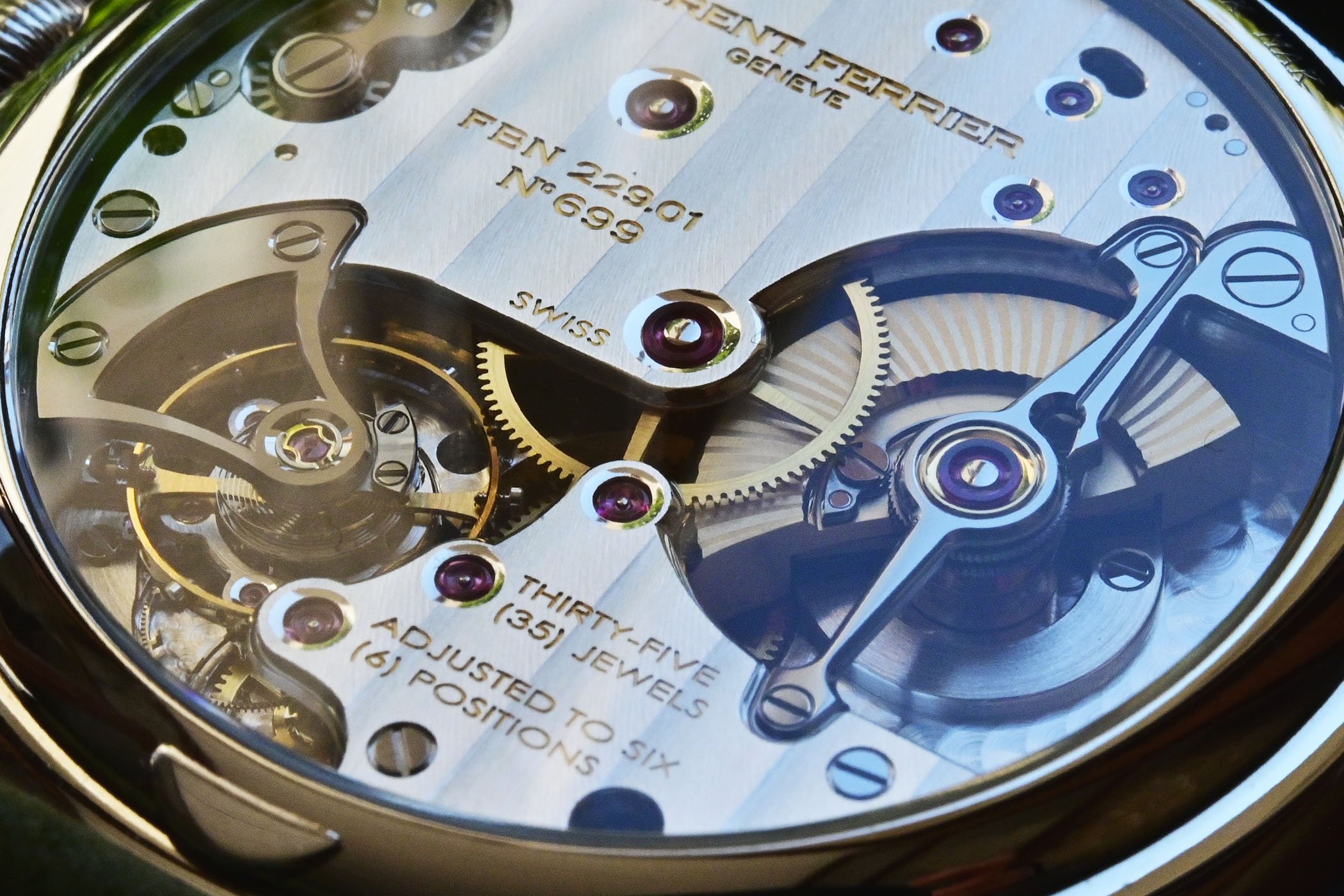
The Problem with the Lever Escapement
Invented by Thomas Mudge in 1754, the lever escapement was revolutionary for its time. However, it has an inherent inefficiency: up to 30% of the mainspring's energy is consumed by friction between the lever and escape wheel. This energy loss limits power reserve and affects long-term accuracy.
Modern Escapement Innovations
Omega Co-Axial Escapement
Invented by George Daniels in 1974, the co-axial escapement uses three pallets instead of two, virtually eliminating sliding friction through a pushing action. Omega has mass-produced this technology since the 1990s, making it the only brand to offer it across its entire collection.
Rolex Dynapulse Escapement
Debuting in 2025 with the Land-Dweller, the Dynapulse uses dual silicon escape wheels with a rolling motion instead of sliding friction. This design achieves approximately 30% greater efficiency than the traditional lever escapement while operating at 5Hz (36,000vph).
Grand Seiko Dual Impulse Escapement
Introduced in 2020, this system dissociates locking and impulse functions. In one direction, power transmits directly to the balance; in the other, it receives indirect impulse via the pallet fork. This hybrid approach improves efficiency while maintaining familiar architecture.
Escapement Comparison Table
| Escapement | Inventor/Brand | Key Innovation | Efficiency Gain |
|---|---|---|---|
| Lever | Thomas Mudge (1754) | Detached impulse concept | Baseline |
| Co-Axial | George Daniels (1974) | Pushing vs. sliding action | Reduced friction |
| Dynapulse | Rolex (2025) | Dual silicon wheels, rolling motion | +30% |
| Dual Impulse | Grand Seiko (2020) | Dissociated locking/impulse | Improved efficiency |
| Monolithic Oscillator | Frederique Constant (2021) | Single silicon piece replacing 26 parts | 10x frequency |
The Silicon Revolution
Silicon's introduction to escapement design has been transformative. The material's properties - lightweight, antimagnetic, temperature-resistant, and frictionless - enable designs impossible with traditional metals. Deep-Reactive Ion Etching (DRIE) allows parts to be cut from silicon wafers with micron-level precision, eliminating traditional machining entirely.
Monolithic Oscillators: The Future?
The most radical innovation is the monolithic oscillator, which replaces the balance wheel, hairspring, and much of the escapement with a single silicon piece. Frederique Constant's version oscillates at 40Hz (288,000vph) - ten times faster than standard movements - producing a completely smooth seconds hand movement.
FAQ
Why hasn't the lever escapement been replaced?
The lever escapement is reliable, accurate, easily mass-produced, and deeply entrenched in watchmaking tradition. Brands like Rolex and Patek Philippe achieve accuracy within two seconds per day with lever escapements, making the case for change less compelling for most applications.
Will silicon escapements require less maintenance?
Silicon components don't require lubrication and are highly wear-resistant, potentially extending service intervals significantly. Some designs could theoretically operate maintenance-free for extended periods.
Are these new escapements available in affordable watches?
Currently, most innovative escapements appear in premium collections. However, as silicon production scales and patents expire, more accessible implementations are expected in coming years.
Sources: Monochrome Watches - Modern Alternatives to the Lever Escapement
Related: How Mechanical Watches Work | Guide to Watch Complications