

Five Game-Changing Technologies That Transformed Watchmaking: From Nuremberg Eggs to Modern Marvels
Five Revolutionary Inventions That Transformed Watchmaking
The evolution of mechanical watches from archaic curiosities to precise marvels spans centuries of innovation. Five monumental inventions have fundamentally transformed timekeeping: the mainspring, balance wheel and hairspring, lever escapement, synthetic jewels, and mass production with interchangeable parts. Understanding these breakthroughs reveals why modern watches achieve the precision we take for granted today.
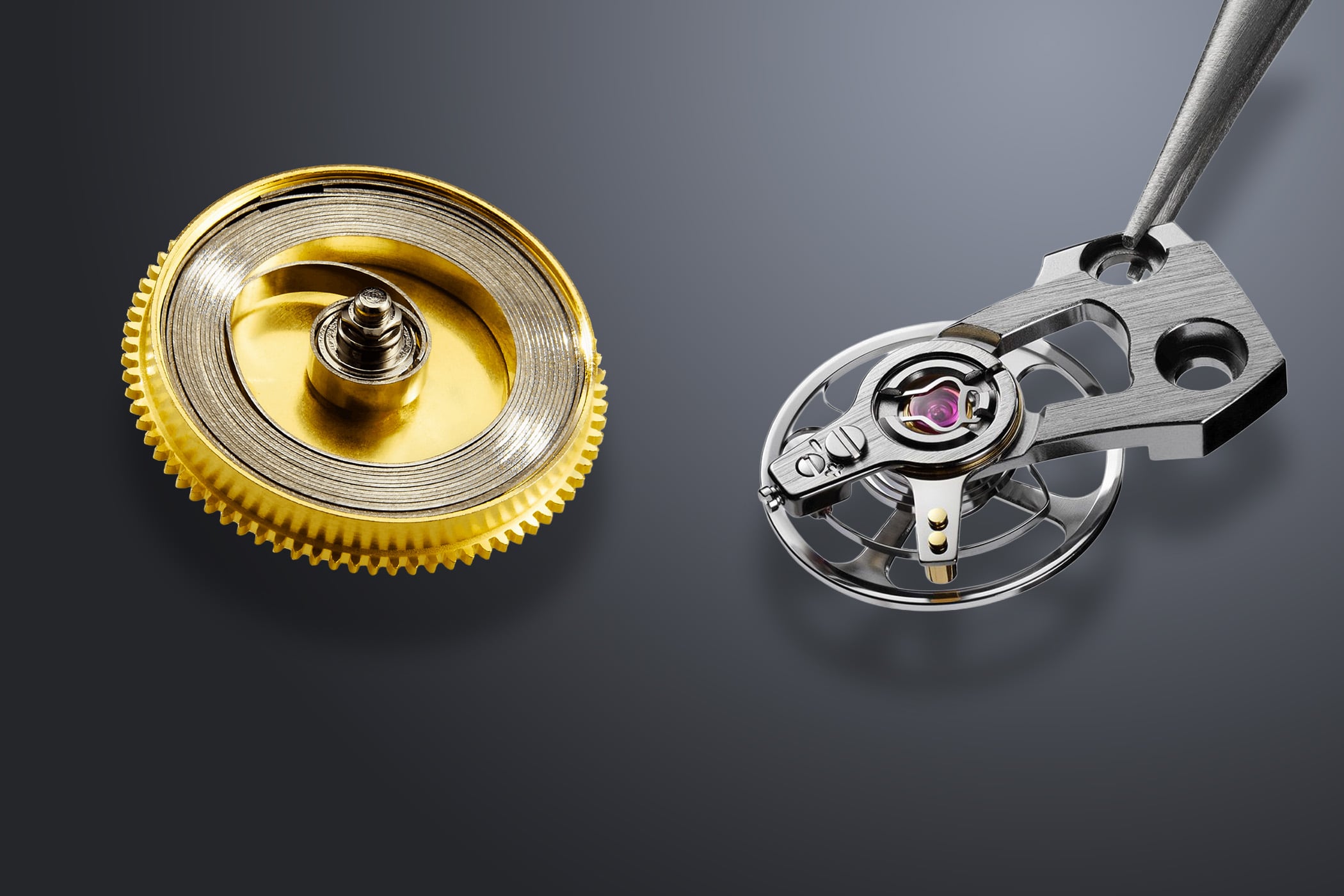
1. The Mainspring: Portable Time Begins
Before the mainspring, timekeeping relied on hanging weights - impractical for portable devices. Peter Henlein's early 16th century "Nuremberg Eggs" were the first to use mainsprings, enabling true pocket watches. Early mainsprings delivered inconsistent power, solved later by the fusee (a conical pulley compensating for spring torque variations) and eventually the going barrel invented by Jean-Antoine Lépine in 1760.
Modern mainsprings use advanced alloys like Nivaflex (cobalt, nickel, chromium) and Seiko's SPRON 510 (adding molybdenum), offering superior fatigue resistance and consistent torque curves.
2. Balance Wheel and Hairspring: Precision Arrives
Invented by Christiaan Huygens in 1675, the balance wheel and hairspring revolutionized accuracy. Where previous timekeepers were off by hours daily, this combination brought precision to minutes - enabling practical minute hands for the first time.
The hairspring's manufacturing difficulty remains legendary: errors of just 0.1 micron affect accuracy, with 0.001mm thickness deviation causing 30+ minutes daily error. Today, most hairsprings come from specialized manufacturers like Nivarox-FAR, though brands like Rolex, Patek Philippe, and A. Lange & Söhne produce them in-house.
3. Lever Escapement: The Heartbeat
Thomas Mudge's 1754 invention introduced the "detached" concept - only engaging the balance during brief impulse periods rather than constant contact. This dramatically improved both accuracy and durability. Despite its age, the lever escapement still regulates approximately 99% of mechanical watches today.
4. Synthetic Jewels: Durability and Consistency
Before 1902, watchmakers used natural rubies and sapphires to reduce friction, but they were expensive and inconsistent. Auguste Verneuil's flame fusion process (the Verneuil process) enabled mass production of synthetic corundum - identical in hardness and wear resistance to natural stones at a fraction of the cost.
A fully jeweled watch contains 17 jewels (up to 21 for automatics), buffering every major pivot point. This innovation alone dramatically improved watch reliability and reduced maintenance requirements.
5. Mass Production: Watches for Everyone
American watchmaker Waltham pioneered interchangeable parts and assembly line production in the mid-19th century. This "American System of Manufacturing" reduced costs dramatically, eventually making watches affordable for the masses - even children. By the 1930s, the first Mickey Mouse watch sold for approximately $3 (about $56 today).
Technology Timeline
| Invention | Date | Inventor | Impact |
|---|---|---|---|
| Mainspring | Early 15th century | Unknown (Peter Henlein applied to watches) | Enabled portable timekeeping |
| Balance & Hairspring | 1675 | Christiaan Huygens | Accuracy from hours to minutes |
| Lever Escapement | 1754 | Thomas Mudge | Standard for 99% of watches |
| Synthetic Jewels | 1902 | Auguste Verneuil | Affordable, consistent bearings |
| Interchangeable Parts | Mid-1800s | American System (Waltham) | Mass production, affordability |
FAQ
Why are mechanical watches still popular when quartz is more accurate?
Mechanical watches represent centuries of craftsmanship, engineering artistry, and heritage. They're appreciated as wearable art and engineering marvels, not just timekeeping devices. The "romance" of mechanical movements drives continued demand despite quartz superiority in pure accuracy.
How do modern watches improve on these historical inventions?
Modern innovations include silicon components (lighter, frictionless, antimagnetic), advanced alloys for mainsprings and hairsprings, improved lubricants, and CNC precision manufacturing. These allow accuracy within seconds per day rather than minutes.
What was the most significant invention in watchmaking history?
Most horologists cite the balance wheel and hairspring (1675) as the most transformative, converting watches from fashion novelties into reliable timekeepers. However, mass production arguably had greater societal impact by making timekeeping accessible to everyone.
Sources: Monochrome Watches - Game-Changing Technologies in Watchmaking
Related: Complete History of Wristwatches | Starting Your Watch Collection