
Citizen Eco-Drive at 50: How Solar Quartz Technology Challenges Mechanical Watchmaking

Citizen Celebrates Half a Century of Light-Powered Innovation
In 2026, Citizen marks the 50th anniversary of its revolutionary Eco-Drive technology — a milestone that underscores the enduring relevance of solar quartz watchmaking in an era increasingly dominated by mechanical luxury and smartwatches. According to Revolution Watch, the technology has fundamentally reshaped one of watchmaking's most fundamental questions: where does a watch get its energy?
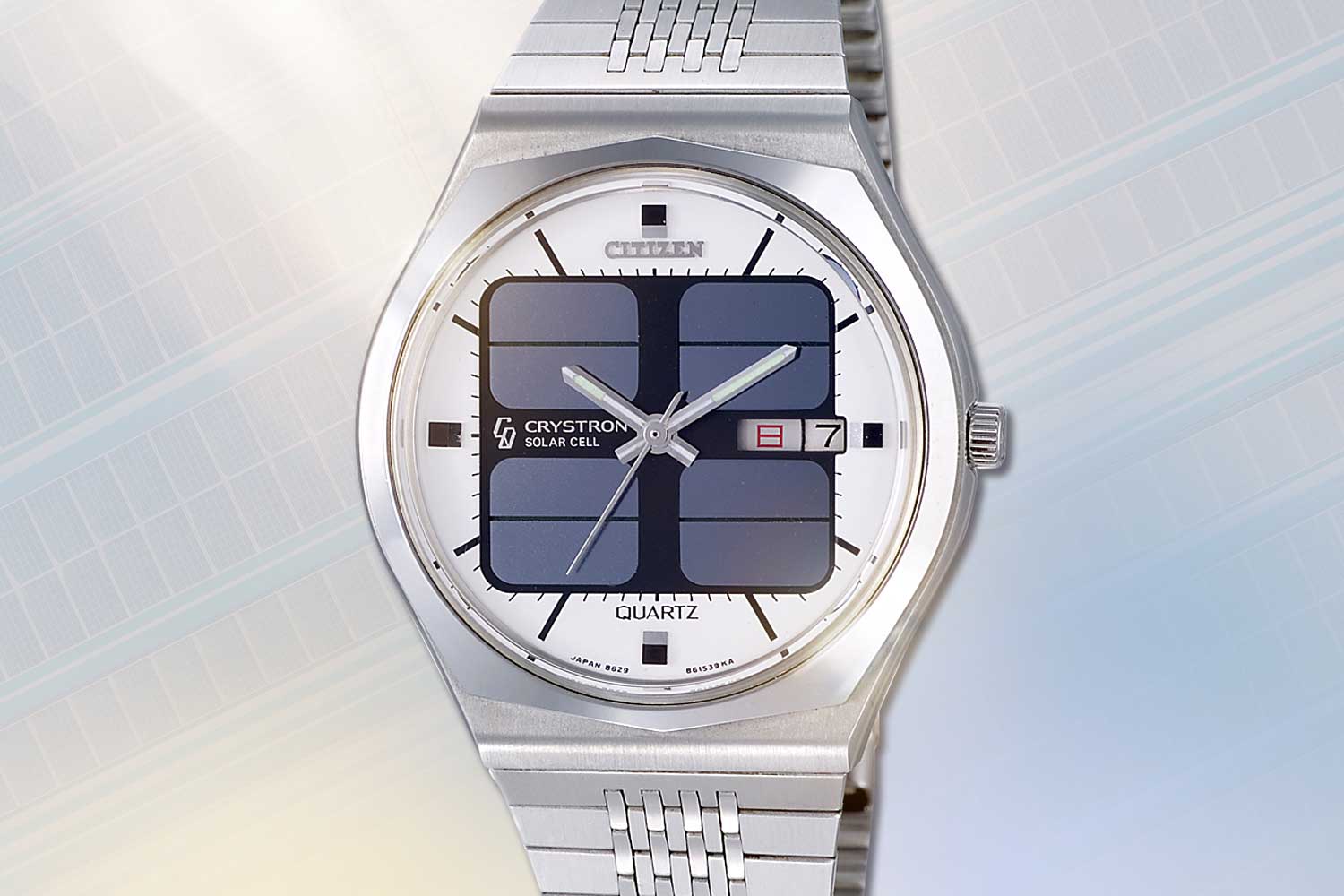
For centuries, mechanical watches relied on wound springs. Then quartz watches arrived, bringing great accuracy but introducing battery dependency. Citizen's engineers took a different path: what if a watch could simply draw energy from the light around it? That question led to the 1976 launch of the Crystron Solar Cell, the world's first light-powered analog watch.
From Crystron to Caliber 0100: A Timeline of Breakthroughs
| Year | Innovation | Significance |
|---|---|---|
| 1976 | Crystron Solar Cell | World's first light-powered analog watch |
| 1986 | Improved Eco-Drive | Achieved ~8 days running time |
| 1995 | Lithium secondary battery | Extended run time to 6 months |
| 1996 | Radio-Controlled Eco-Drive | First radio-controlled light-powered watch |
| 2011 | Satellite Wave GPS | GPS satellite time synchronization |
| 2019 | Caliber 0100 | ±1 second per year accuracy |
| 2023 | Eco-Drive 365 | 365-day power reserve in total darkness |
| 2026 | Eco-Drive PHOTON | 50th anniversary limited edition |
How Solar Quartz Stacks Up Against Mechanical Movements
The debate between solar quartz and mechanical watches is no longer simply about accuracy versus craftsmanship. Modern solar quartz movements like Citizen's Eco-Drive have evolved to offer compelling advantages:
- Accuracy: Caliber 0100 achieves ±1 second per year — compared to COSC-certified mechanical movements at -4/+6 seconds per day
- Power Reserve: Eco-Drive 365 runs for a full year without light; mechanical watches typically offer 40-80 hours
- Maintenance: No battery changes needed; mechanical watches require servicing every 5-10 years
- Sustainability: Solar-powered watches eliminate battery waste entirely
- Complications: Eco-Drive now offers GPS, radio-controlled time, and perpetual calendars
As Revolution Watch notes, "Citizen's Eco-Drive technology has spent half a century redefining one of the fundamental questions of watchmaking." Today, Eco-Drive watches are worn in approximately 140 countries worldwide.
The Eco-Drive PHOTON: A New Chapter
To celebrate the anniversary, Citizen introduced the Eco-Drive PHOTON — a limited-edition model with a dial inspired by the famous double-slit experiment in physics. The watch features a 39.6mm Super Titanium™ case and the new Caliber E036 movement, capable of running for a full year on a single power reserve.
Two versions will be produced, each limited to 5,000 pieces worldwide: a silver-toned case with a deep blue dial and yellow seconds hand, and a black-and-gold configuration with a purple seconds hand.
FAQ: Solar Quartz vs Mechanical Watches
Q: Are solar quartz watches less prestigious than mechanical watches?
A: While mechanical watches are prized for their handcrafted artistry and heritage, solar quartz technology represents a different kind of innovation — one focused on precision, sustainability, and practical daily wear. Both have their place in modern horology.
Q: How long does a solar quartz watch last?
A: With proper care, Citizen Eco-Drive watches can last decades. The rechargeable cell is designed to last the lifetime of the watch, and the movements are built for long-term reliability. Some early Eco-Drive models from the 1980s are still functioning today.
Q: Can solar quartz watches match mechanical accuracy?
A: Solar quartz watches vastly outperform mechanical watches in accuracy. Citizen's Caliber 0100 achieves ±1 second per year, while the best COSC-certified mechanical movements are rated at -4/+6 seconds per day — a difference of several hundred times.
Internal Resources
- Complete Watch Maintenance Guide: Mechanical vs Quartz Care
- Solar Watch Buying Guide: Choosing the Right Eco-Drive
Source: Based on "Citizen Eco-Drive at 50: Half a Century of Light-Powered Innovation" by Revolution Watch, published March 20, 2026.