

Charles Vermot: The Hero Who Secretly Saved the Zenith El Primero From Destruction
Charles Vermot: The Man Who Saved the Zenith El Primero From Destruction

In the annals of watchmaking history, few stories are as dramatic or consequential as that of Charles Vermot. A Zenith workshop manager who defied corporate orders to destroy the tools and machinery that produced the El Primero movement, Vermot's act of quiet rebellion in 1976 may have single-handedly ensured the survival of one of the world's greatest mechanical chronograph calibres.
The Crisis: Quartz vs. Mechanical
In 1971, Zenith was acquired by Chicago-based Zenith Radio Corporation, a manufacturer of radios and television sets. US management of Zenith Watches SA gradually lost faith in the future of mechanical watchmaking as quartz technology rapidly gained market share.
The decision was made to halt production of mechanical movements in 1975. Then, in 1976, management went further — they ordered the sale of all metal presses, cams, cutting tools, and manufacturing plans for the El Primero as scrap metal by weight. The soul of Zenith's mechanical heritage was to be melted down.
The Defiance
Charles Vermot was the workshop manager in charge of the El Primero assembly workshop, where the chronograph was meticulously assembled through no fewer than two thousand operations. He knew what those tools represented — not just equipment, but generations of specialized knowledge and craft.
Vermot made his case to US management, asking to keep all the tools necessary for El Primero's production in a small, dedicated workshop. His request was met with complete silence.
But Vermot wasn't willing to accept the death of the El Primero. He believed, with every fibre of his being, that mechanical watchmaking had a future.
The Secret Operation
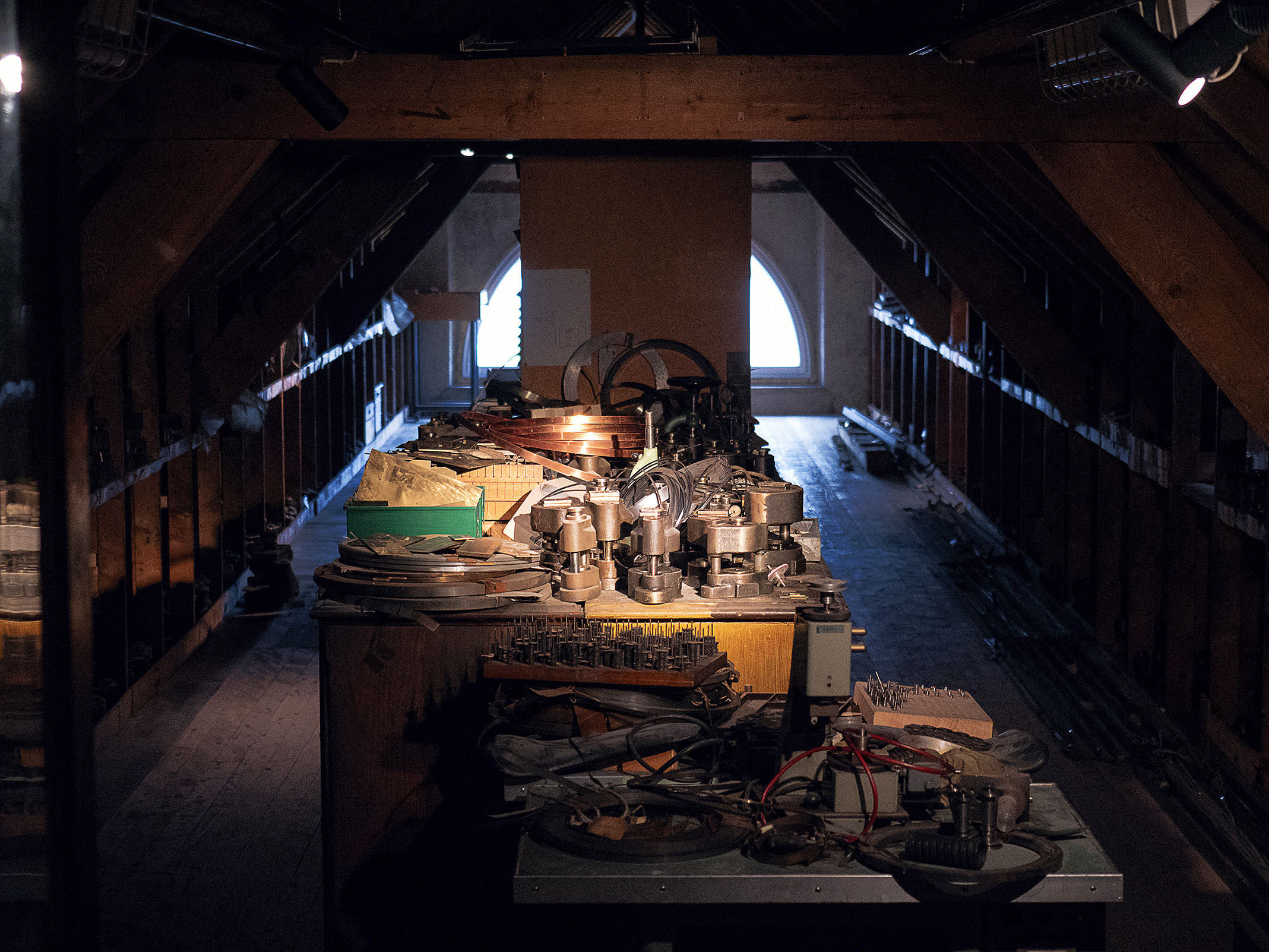
With the help of his brother Maurice — also a Zenith employee — Charles orchestrated a covert operation. By night, they transported the heavy equipment through a passage at the back of the building and up approximately 50 steps to an isolated store on the top floor.
In six months, Vermot and his brother managed to save approximately 150 presses. These weren't small hand tools — they were industrial-grade manufacturing presses worth at least several million Swiss francs. The brothers built a wall to hide the treasure trove, ensuring it would remain concealed from management.
The story is almost cinematic in its drama: two brothers, lugging heavy machinery through dark passages at night, walling it up in an attic, knowing that discovery would mean the end of their careers.
The Parallel: ETA Valjoux 7750
Interestingly, an almost identical story occurred with another legendary chronograph movement, the ETA Valjoux 7750. That movement survived thanks to a man named Edmond Capt, who also defied orders and discreetly stored tools and documentation that made possible the relaunch of the 7750.
Both stories illustrate a pattern in Swiss watchmaking history: when corporate management decided to abandon mechanical watchmaking, it was individual employees with deep craft knowledge who recognized the long-term value of what was being destroyed.
The Payoff
Vermot's gamble paid off spectacularly. In 1978, Zenith was sold by Zenith Radio Corporation to a trio of Swiss manufacturers who wanted to preserve the Swiss watchmaking legacy. Pierre-Alain Blum, president of Ebel, discovered unfinished El Primero movements and used them in Ebel chronographs, rebranding them as the Ebel calibre 134.
Then came the ultimate validation: Rolex. In the early 1980s, Rolex came seeking a movement for the Daytona, which had long relied on the manually wound Valjoux 72. A ten-year contract was signed in 1984, tasking Zenith with producing El Primero movements for Rolex. The first El Primero-equipped Daytonas (ref. 16520) were unveiled in 1988.
Without Vermot's clandestine preservation efforts, this grand deal — and the survival of the El Primero itself — would have been impossible.

Legacy
Today, the El Primero remains in production as one of the most revered chronograph movements in watchmaking. The calibre 3600 family — the modern evolution of Vermot's saved movement — powers watches across the LVMH group and continues to be recognized for its technical excellence.
Charles Vermot's story stands as a testament to the power of individual conviction against corporate short-sightedness. In an era when watch brands now celebrate their heritage and craft, Vermot was practicing those values decades before they became marketing talking points.
FAQ
Who was Charles Vermot?
Charles Vermot was a Zenith watchmaker and workshop manager who, in 1976, defied orders from American management to destroy the tools and machinery for producing the El Primero chronograph movement. He secretly transported approximately 150 presses and tools to an attic at Zenith's manufacture, where they remained hidden until the movement was revived in the 1980s.
What happened to the El Primero tools that Vermot hid?
The tools remained concealed in the attic until Zenith was sold to Swiss buyers in 1978. When the El Primero was revived in the early 1980s — first for Ebel and then for Rolex — the hidden tools were recovered and put back into production. Today, they continue to be used in manufacturing modern El Primero movements.
Is there a memorial or tribute to Charles Vermot?
Zenith has honored Vermot's legacy in various ways over the years, including featuring his story in official brand communications and museum displays. His act of defiance is widely regarded as one of the most important moments in Zenith's history and in the broader survival of mechanical watchmaking during the quartz crisis.
Source: According to Monochrome Watches.
Discover more about watchmaking heritage in our complete mechanical watch guide.